
 EN

What Does a MOLLE Webbing System Add to a Fishing Bag?
A fishing bag does more than hold tackle. It has to keep frequently used items reachable, keep a changing load organized, and support the way anglers move between the bank, boat, dock, or trail. A molle webbing system adds a modular attachment surface to that job. Instead of committing every accessory to a permanent pocket, the bag can offer rows of webbing where compatible pouches, holders, or small organizers may be positioned for the intended fishing routine.
For a brand, importer, or product-development team, the value is not simply that the exterior looks more technical. The useful question is: which items need flexible access, and can the webbing layout support those items without making the fishing bag heavier, cluttered, or hard to use? A fishing bag with MOLLE straps can create a clearer answer when the attachment points are planned around real gear-handling tasks.
What a MOLLE webbing system is
MOLLE stands for Modular Lightweight Load-carrying Equipment. On bags, the visible part is generally a grid of horizontal webbing often described as PALS-style webbing. Compatible accessories use straps that weave through both the accessory and the bag’s webbing, rather than hanging from a single loose loop. That alternating connection is what makes the system useful as a stable modular platform.
A common PALS reference uses webbing about 1 inch (25 mm) wide, with rows and stitch points arranged to create a repeatable grid. Those dimensions are useful context, not a specification for every fishing bag. If a product is intended to accept particular add-ons, the actual webbing width, row spacing, stitch placement, material, and reinforcement should be confirmed in the bag specification and then checked on a sample.
Where modular webbing helps on a fishing bag
The practical value of a molle webbing system appears when an angler’s carrying list changes from one trip to the next. One outing may require a compact tool holder and line cutter; another may call for a small utility pouch, a water-bottle holder, or a place to secure a rain shell. A fixed pocket layout cannot suit every combination equally well. A modular surface lets the user or brand configure selected exterior storage around the likely activity.
- High-frequency tools: A compatible holder may keep pliers, a small cutter, or other permitted tools outside the main compartment, so they do not have to be searched for among tackle boxes.
- Small-item organization: An add-on pouch can separate keys, leader material, gloves, a phone case, or other small items from lures and bulkier equipment.
- Trip-specific capacity: The bag can stay relatively streamlined for a short session, then accept extra organization when the equipment list grows.
- Product-line differentiation: For a brand building fishing gear, modular webbing can support a family of compatible accessories without claiming that one bag must solve every carrying need.
That flexibility has limits. A molle webbing system is most useful when the attached items have a defined purpose. Adding pouches simply because attachment space exists can make a bag wider, less balanced, and slower to manage. In other words, more attachment points do not automatically mean better organization.
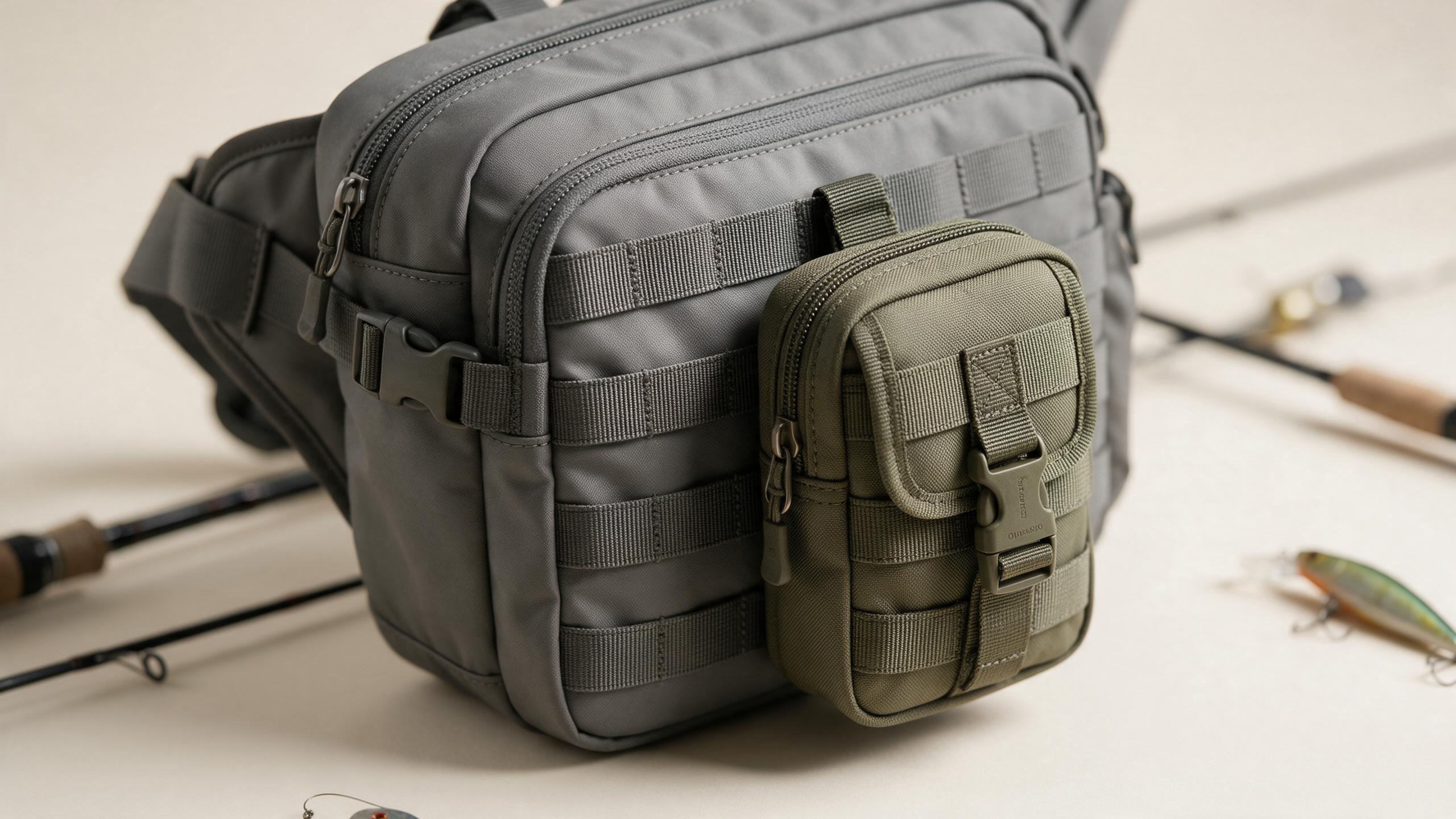
Why placement matters as much as the webbing itself
Before adding a molle webbing system to a fishing bag, map the user’s movements. What needs to be reached while standing at the water? What is only needed at a rest stop? Which items should remain protected inside the main compartment? This approach turns webbing from a decorative panel into a usable layout decision.
Side panels can be appropriate for a small accessory that needs quick access, provided the added depth does not interfere with carrying or movement. Front placement can support a compact organizer, but it should not block opening the main compartment. Shoulder-strap webbing can be convenient for very small compatible items, yet it needs careful load control so the strap remains comfortable and does not swing. Each position should be considered alongside the bag’s closure path, carry orientation, and expected load.
A fishing bag with MOLLE straps also benefits from clear product communication. Rather than implying that every accessory is included, describe the webbing as a compatible attachment surface and show which kinds of add-ons are intended to work with it. That makes the modular benefit easier for retail teams and end users to understand.
What to confirm during fishing-bag development
For OEM or private-label projects, a molle webbing system should be treated as a group of confirmation points, not a single checkbox. The following questions can help development, purchasing, and quality teams align before production:
- Use case: Which accessories are expected to attach, and which are intentionally kept inside the bag?
- Grid compatibility: What webbing width, row spacing, and attachment strap format will the selected accessories use?
- Placement: Will attached accessories affect zipper access, sling rotation, balance, or body movement?
- Construction: What webbing material, stitching pattern, backing reinforcement, and edge finishing are required for the intended load?
- Sample validation: Which representative accessories should be attached and removed during sample review, and what signs of shifting, rubbing, or access interference should be checked?
- Brand presentation: How will color, webbing density, logo placement, and accessory range fit the target customer rather than create a generic tactical look?
These questions are especially helpful when a brand needs a fishing bag that supports customization but still has a focused identity. The design should reflect the equipment and setting it is made for, not borrow features without a carrying logic.
Using modular webbing as a product advantage
A molle webbing system can help a fishing bag deliver adaptable organization, cleaner separation of small gear, and room for a compatible accessory ecosystem. Its strongest value comes from matching attachments to common fishing tasks and validating the layout on a physical sample. For procurement teams, that means documenting webbing details and test points instead of relying on broad claims about versatility.
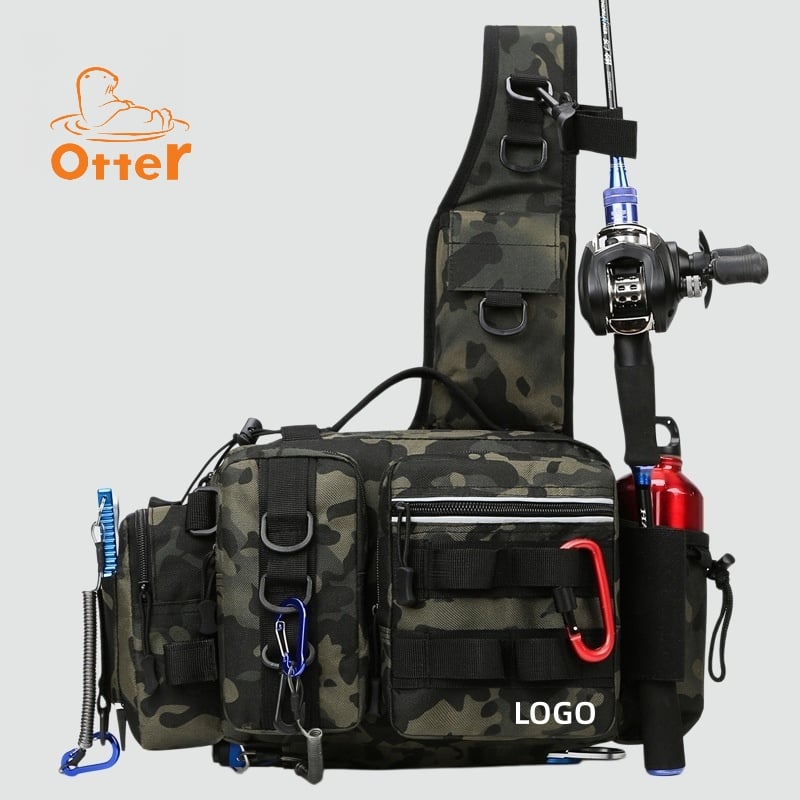
For example, the Fishing Tackle Sling Bag Lightweight Sling Backpack Storge Gear is listed with MOLLE straps. If the configuration is being evaluated for a product program, the next step is to clarify the intended compatible accessories, their attachment method, and the sample-review criteria. This turns the feature into a usable specification decision rather than a surface-level detail.
Conclusion
For fishing gear organization, a molle webbing system adds value by making selected exterior storage configurable. It can improve access to the items that matter most on a given outing while allowing the core bag to remain organized. The result depends on thoughtful placement, compatible accessories, and verified construction. When those points are written into the development brief and reviewed on a sample, a fishing bag with MOLLE straps has a stronger basis for both functional use and product differentiation.
 Hot News