
 EN

Fishing Backpack with Rod Holder: Features Buyers Should Compare
A fishing backpack rod holder is not simply a pocket stitched to the side of a tackle bag. For a brand buyer, importer, or product manager, it is part of a carry system that must work with rods, tackle trays, rain gear, water, and the way an angler travels to the bank, pier, or boat ramp. A useful comparison starts with the target user rather than a long feature list.
When reviewing a fishing backpack range, separate confirmed construction details from claims that need sample verification. The practical question is whether the rod holder, storage layout, weather protection, and harness work together under the intended load. That approach makes supplier discussions clearer and helps keep a product brief from becoming a collection of unrelated add-ons.
Start with the intended fishing trip and load
Before comparing pockets or fabrics, define the use case. A compact bank-fishing bag may prioritize quick access and an unobtrusive profile. A fuller-day backpack may need room for tackle boxes, food, a rain layer, tools, and personal items. Kayak, surf, fly-fishing, and shore applications can each change the balance between capacity, stability, and water exposure.
This matters because a fishing backpack is part of an equipment system, not a stand-alone item. Rod length, reel size, landing-net carry, box dimensions, and how far the user walks all affect the right layout. More features do not automatically mean a better fit; the priority order needs to be clear. Ask suppliers which tray sizes fit the main compartment, what can be reached without opening the full pack, and how the pack behaves when its side holders are occupied.
Compare the fishing backpack rod holder as a load-bearing feature
A fishing backpack rod holder should be reviewed for position, retention, reinforcement, and its effect on balance. Side sleeves, external straps, molded loops, and removable holder assemblies can serve different product concepts. The important point is not the label; it is whether the system holds a rod securely while the wearer walks, bends, or sets the pack down.
| Comparison point | What to inspect | Why it matters |
|---|---|---|
| Holder location | Side, rear, or offset placement; clearance from the body and ground | Placement influences snag risk, doorways, and balance. |
| Retention method | Sleeve depth, upper strap, buckle or hook-and-loop closure | A sleeve alone may not control the upper section of a rod during movement. |
| Attachment reinforcement | Layered fabric, binding, bartacks, and load-distribution panels | Rod weight and motion concentrate stress at the attachment area. |
| Usable capacity | Number of holders and whether occupied holders affect access | Two holder positions can be useful only if the pack stays manageable when both are loaded. |
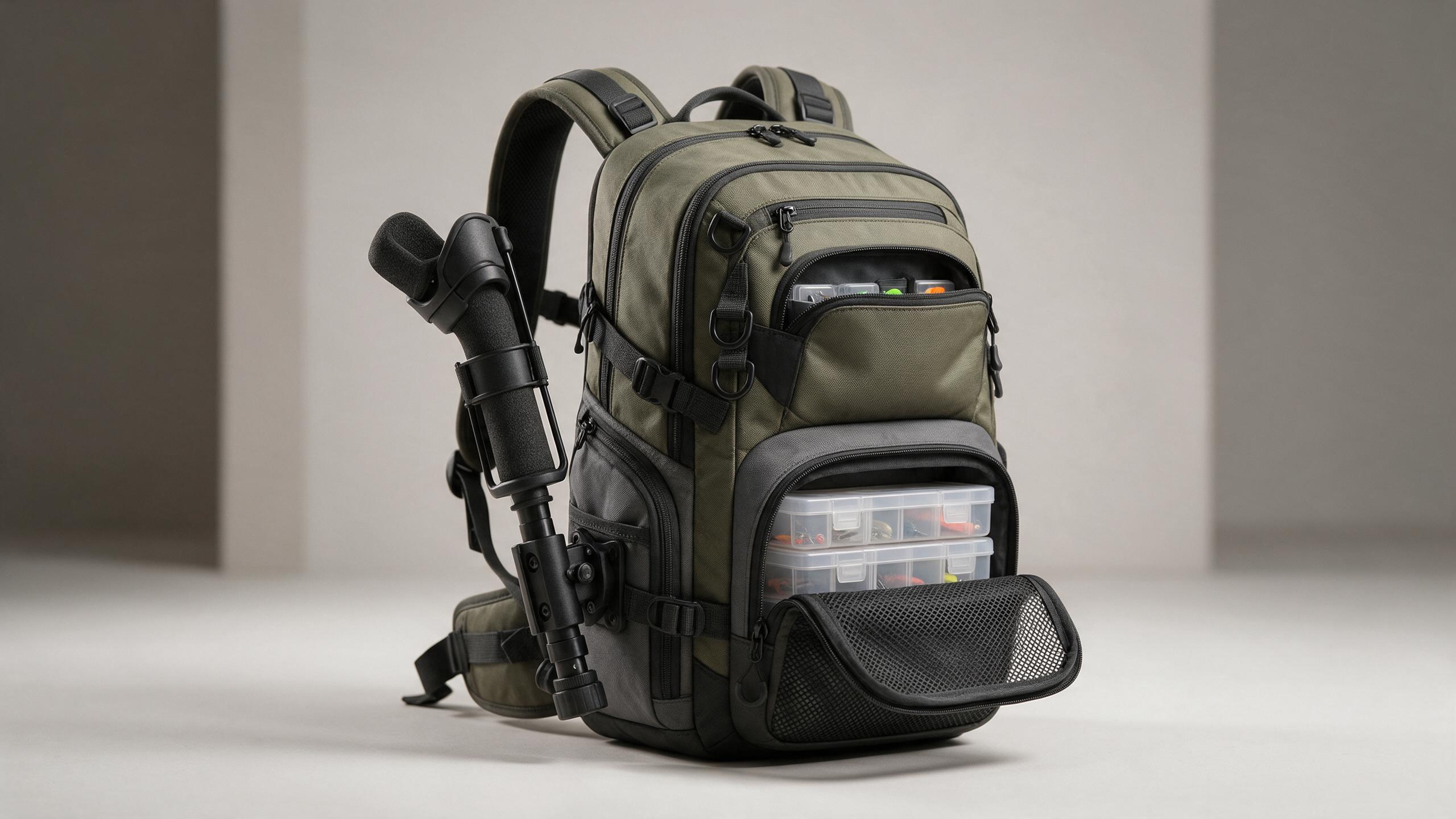
Request a loaded-walk sample check rather than relying only on a studio photo. A supplier can demonstrate the intended rod orientation, the holder’s adjustment range, and whether a reel or rod butt interferes with zipper pulls, mesh pockets, or shoulder movement. If the product will be sold as a fishing backpack rod holder solution, these details deserve a place in the specification sheet.
Assess storage as a workflow, not as a pocket count
The main compartment should be evaluated around the angler’s sequence of use: travel, setup, fishing, and pack-down. Look at tray compatibility, divider options, front access, tool storage, and where wet or dirty gear can be kept apart from delicate items. Small organizers may help with terminal tackle, but they should not reduce access to the items used most often.
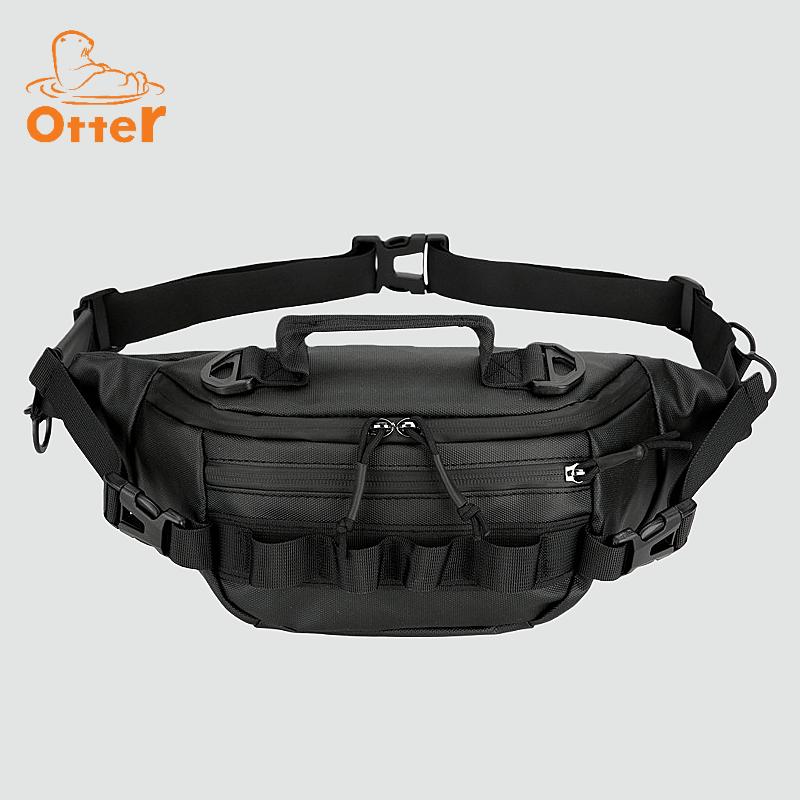
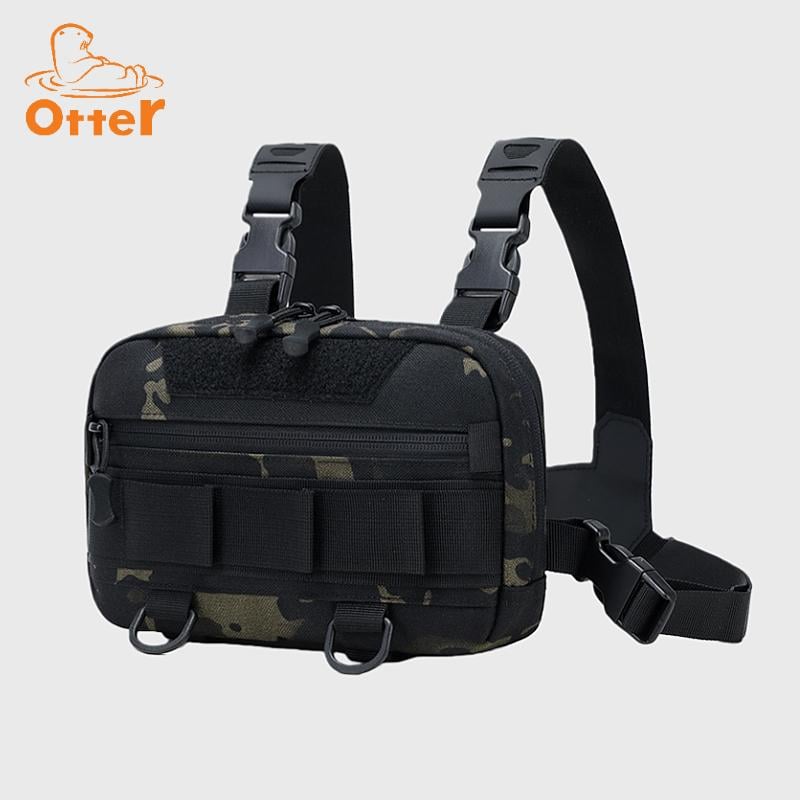
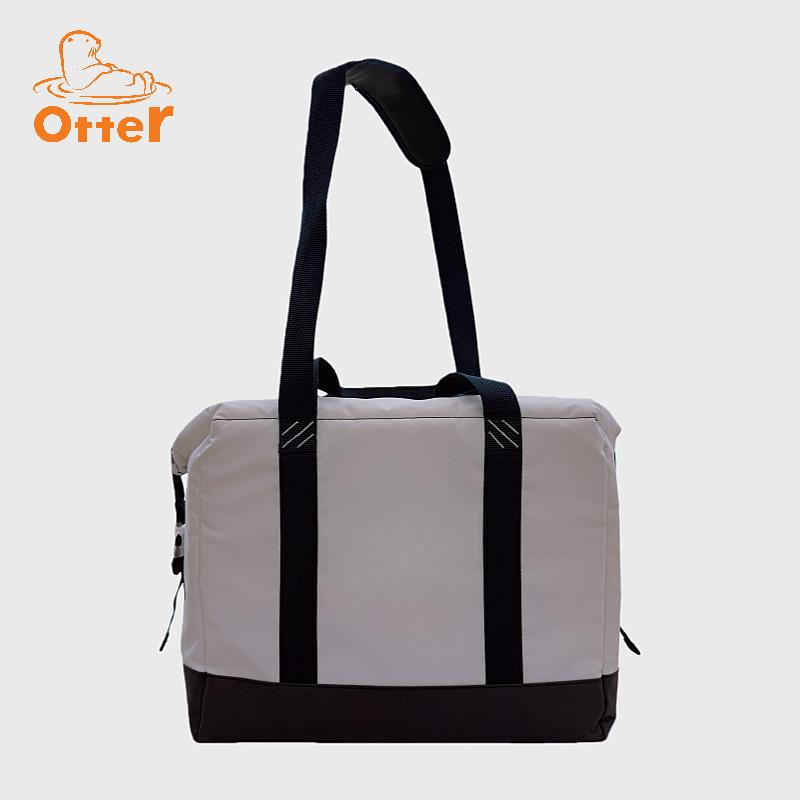
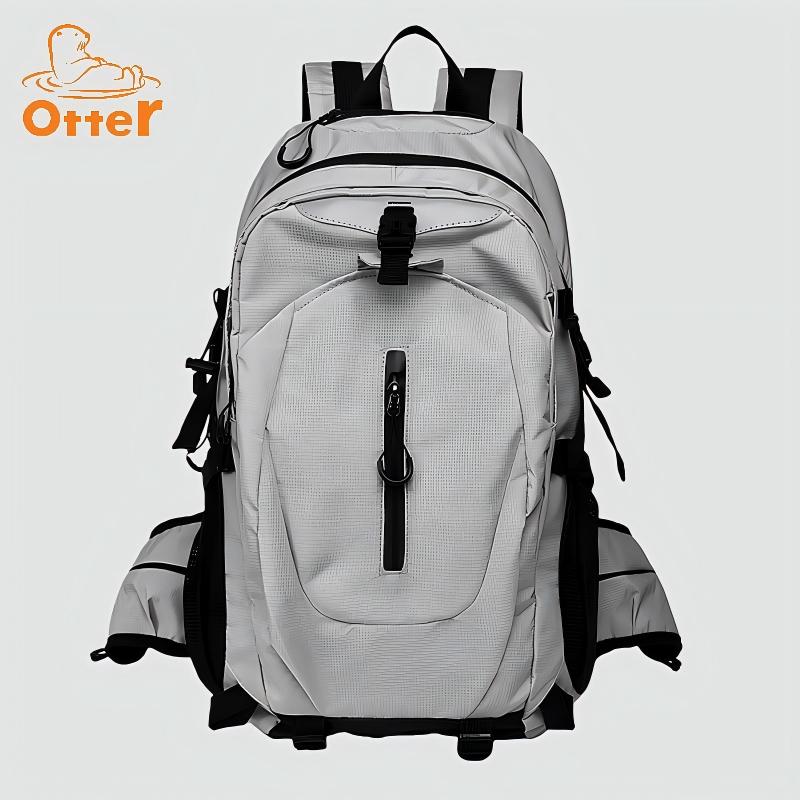
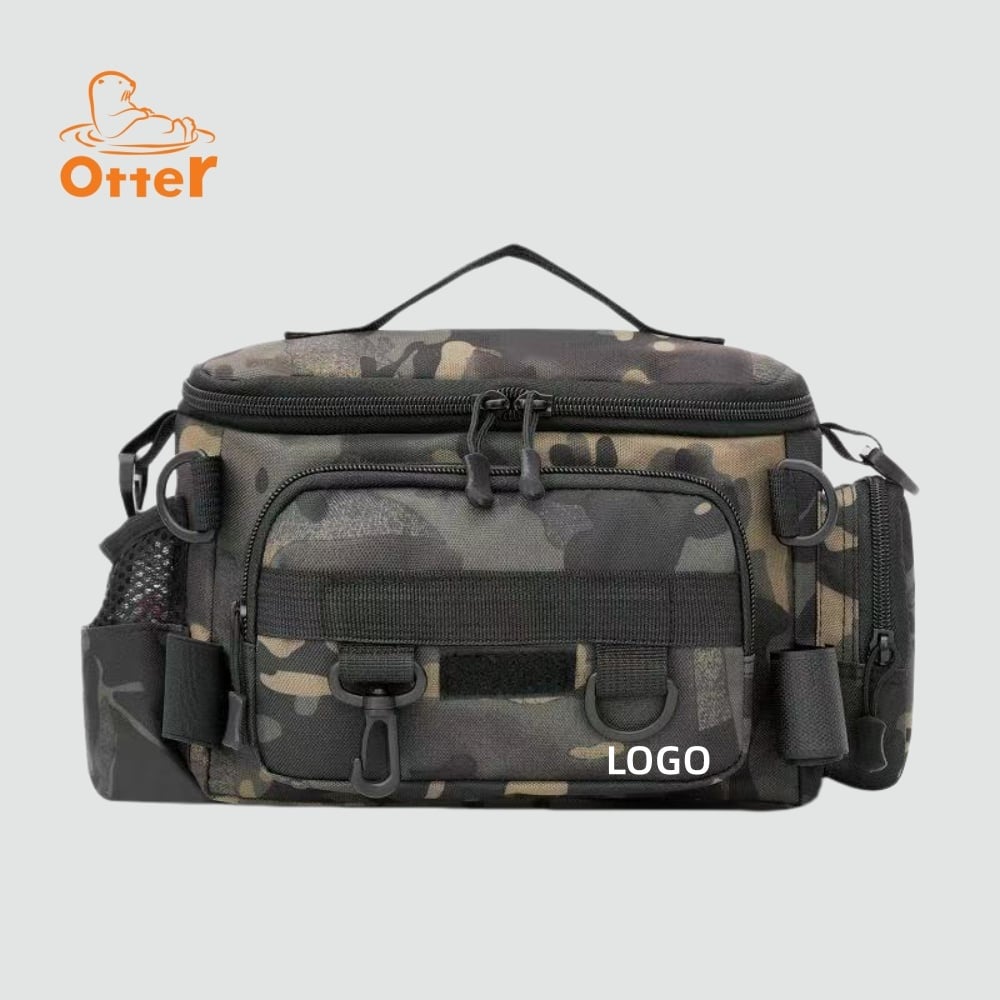
A product such as the Waterproof Fishing Backpack Tackle Bag With Rod Holders can be a useful reference point for discussing how a rod-carrying backpack fits into a broader tackle-bag assortment. Its product title confirms the category and rod-holder orientation; buyers should still verify compartment dimensions, hardware, and load behavior against the final sample. For a lighter or more mobile format, the Fishing Tackle Sling Bag Lightweight Sling Backpack Storge Gear provides a different carry-format comparison.
For many buyers, a sensible brief distinguishes three zones: a protected main zone for tackle, a fast-access zone for frequently used tools, and a separate zone for wet clothing or food. Whether those zones are internal or external depends on the target price point and user routine. What matters is that the layout is explainable in a product listing and repeatable in production.
Specify water protection with precise language
Water-related language deserves careful review. Water-resistant fabric may help with splashes and short rain exposure, while a waterproof claim usually requires a broader construction discussion involving fabric coating or lamination, seams, zipper design, openings, and the intended exposure conditions. The same material can perform differently when zippers, seams, and abrasion areas are considered.
For a fishing backpack rod holder intended for damp shorelines or boat decks, ask which parts of the pack receive the most exposure: the base, the side-holder seams, the front pocket, or the top closure. Then ask for the applicable material specification and test information. Do not treat a fabric description alone as proof of whole-bag performance. This evidence-first approach gives merchandising teams more accurate language and helps avoid a mismatch between expectation and use.
Review comfort, stability, and carry transitions
Back-panel padding, shoulder-strap contour, sternum straps, grab handles, and the bottom structure all influence how a pack carries. The useful test is a transition test: pick the pack up, wear it, reach for a side item, set it down, and remove one rod. A design that looks organized on a table may feel awkward if a loaded rod pulls the pack to one side or blocks a zipper.
Buyers should also decide whether the product needs a backpack-only setup or a hybrid carry option. Sling-style products can suit short, mobile sessions, while conventional two-strap packs may better distribute weight over longer walks. Neither approach is universally suitable. The user profile, expected load, and trip duration should decide the direction.
Turn the comparison into a supplier-ready checklist
For a consideration-stage purchase, build a comparison matrix that separates must-have requirements from optional details. The following checklist keeps the conversation focused on evidence that can be checked in drawings, samples, and production inspections:
- Target use case, expected load, and compatible tackle-tray dimensions
- Rod-holder position, number, retention method, and reinforcement locations
- Main, quick-access, and wet-gear storage zones
- Fabric, base, seam, zipper, and closure details behind any water-protection statement
- Harness construction, carrying modes, and loaded-walk sample observations
- Branding areas, color options, packaging, and OEM or ODM requirements
A capable fishing backpack rod holder design brings these decisions together instead of asking one component to solve every problem. For buyers developing an outdoor-bag assortment, a clear brief and a properly loaded sample review are often more useful than comparing feature counts alone.
 Hot News