
 EN

Waterproof vs Water-Resistant Backpack: What B2B Buyers Need to Specify
For an outdoor-brand buying team, waterproof vs water resistant backpack is not a wording preference. It changes the product brief, construction choices, requested evidence, cost position, and the conditions under which the finished pack may be marketed. A water-resistant hiking rucksack and a waterproof dry-pack can both serve wet-weather users, but they should not be sourced against the same unqualified requirement.
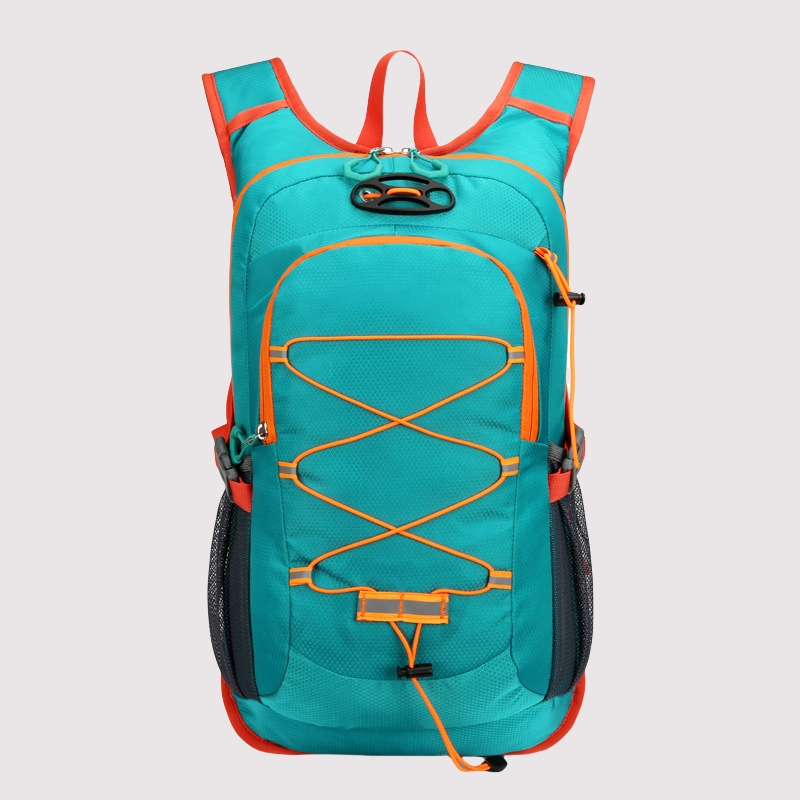
Start with the user’s exposure rather than a material name. A commuter may need protection from short rain showers; a paddling, fishing, or watersports customer may need a pack designed for sustained spray or an accidental drop in water. That distinction should drive the specification. The 35L Roll-Top Waterproof DryPak Backpack and the 70L Hiking Cycling Backpack Large Capacity Water-Resistant Outdoor Rucksack illustrate two different product definitions; buyers should confirm the finished-product details for each program before making a claim.
What the terms should mean in an RFQ
A water-resistant backpack is generally intended to slow water penetration during light or limited exposure. Its protection can come from a tight fabric weave, coating, laminate, water-repellent finish, flap coverage, or a combination of these features. It may be suitable for hiking, cycling, commuting, or travel where the main risk is rain rather than immersion.
A waterproof backpack should be defined more precisely: the buyer needs to state the conditions the completed bag must withstand. The shell alone is not enough. Water can enter through seams, zipper tracks, needle holes, roll-top openings, attachment points, and poorly sealed pockets. A useful waterproof vs water resistant backpack brief therefore describes the exposure scenario, the closure system, the construction, and the evidence required—not only a fabric label.
Do not treat water-repellent, water-resistant, and waterproof as interchangeable. A water-repellent finish may be relevant to a shell fabric; it does not, by itself, establish waterproof performance for the completed backpack. For textile screening, AATCC TM22 is a spray-test method for resistance to surface wetting. Ask separately how seams and closures are evaluated on the finished pack.
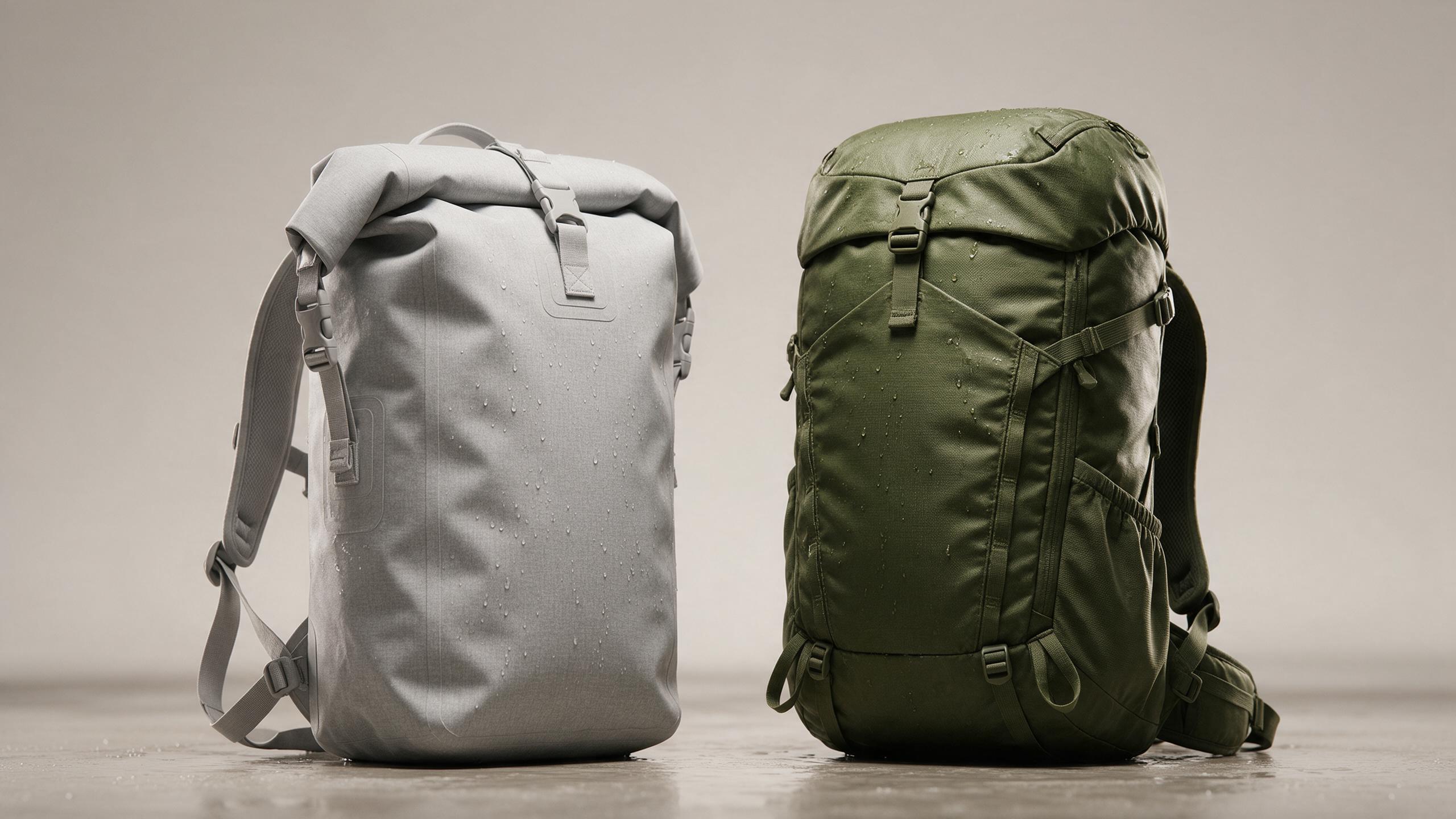
Compare the full construction, not just waterproof backpack materials
| Specification area | Water-resistant brief | Waterproof brief |
|---|---|---|
| Shell | Specify fabric type, denier or weight where relevant, and any coating or finish requested. | Specify shell construction plus the performance level needed under the defined exposure condition. |
| Seams | Identify seam placement and whether exposed stitching is acceptable for intended rain use. | State the required seam-sealing or welded construction and which seams must be protected. |
| Closure | Zip, flap, drawcord, or covered opening may suit brief rain exposure. | Define the required closure architecture, such as a roll-top, and how it must be operated for protection. |
| Pockets and fittings | Clarify whether external pockets may admit water. | Specify which compartments must remain protected and whether penetrations are permitted. |
| Proof | Request material and finish information plus sample review. | Request a finished-product test plan, stated conditions, pass criteria, and report format. |
In other words, waterproof backpack materials are only one part of a claim. TPU-laminated fabric, PVC-coated fabric, coated nylon, or coated polyester may be considered for a program, but material selection must be matched to seams, closure design, pack shape, and the target use. Buyers should avoid assuming that a familiar material automatically produces a waterproof finished bag.
Match protection level to the user scenario
Light rain, commuting, and general trail use
A water-resistant option can be appropriate when the user needs the bag to cope with intermittent rain, splashes, or damp ground contact. The brief should define the expected duration and intensity of exposure, the compartments that need protection, and whether a rain cover is part of the intended system. This keeps the program practical without implying immersion protection.
Heavy rain, boat decks, and wet-gear transport
When users may face sustained rain, repeated spray, or consistently wet surroundings, the RFQ should move beyond a generic water-resistant label. Specify the closure approach, seam construction, and the operational conditions under which the pack must protect contents. For example, roll-top designs need a clear instruction for rolling and fastening; otherwise the claim can exceed real-world use.
Submersion-sensitive contents
If the buying team expects protection during accidental submersion, say so explicitly. Define water depth or pressure, duration, load state, and whether the requirement applies to the main compartment, every pocket, or selected internal storage. If an IPX-style rating is requested, connect it to a relevant finished-product test and report. An IPX label describes a defined laboratory exposure; it should not replace a clear product-use brief.
A B2B specification checklist before sampling
Before approving a quote or sample, use the following checklist for every waterproof vs water resistant backpack program:
- Claim language: Is the market claim water-repellent, water-resistant, or waterproof? Define it in the product brief.
- Exposure condition: Is the use case light rain, sustained rainfall, spray, wet-ground contact, or accidental submersion?
- Protected volume: Which compartment, pocket, or internal organizer must remain dry?
- Shell requirement: What fabric construction, coating, laminate, or finish is requested—and what evidence is needed?
- Seam requirement: Are sewn seams acceptable, or do selected seams require sealing or welding?
- Closure requirement: Which opening style is acceptable, and how must it be secured during testing and use?
- Hardware and access points: How should zippers, ports, straps, and external pockets be treated in the claim?
- Test request: What finished-product test conditions, sample quantity, pass criteria, and documentation should the supplier provide?
- Care and use limits: What instructions or exclusions are needed so marketing copy reflects the verified scope?
Specification questions that make the comparison usable
For each waterproof vs water resistant backpack request, record the intended exposure before comparing prices. The phrase waterproof vs water resistant backpack should appear in the internal product brief because it signals that claim language, construction, and proof must be reviewed together.
During supplier communication, the waterproof vs water resistant backpack question starts with use conditions. In sample review, the waterproof vs water resistant backpack question becomes a check of seams, closures, and protected compartments. In marketing review, the waterproof vs water resistant backpack question becomes a check that the approved claim matches the evidence.
| Brief question | Why it matters for waterproof vs water resistant backpack sourcing |
|---|---|
| What water exposure is expected? | A waterproof vs water resistant backpack brief needs a stated rain, spray, or immersion scenario. |
| Which contents need protection? | A waterproof vs water resistant backpack program may protect only a main compartment or a wider set of pockets. |
| How is the opening secured? | A waterproof vs water resistant backpack claim depends on the specified closure as well as the shell. |
| What must the sample demonstrate? | A waterproof vs water resistant backpack sample should be assessed against agreed conditions, not a generic label. |
| What can sales copy state? | A waterproof vs water resistant backpack claim should use the language supported by the finished-product result. |
Ask suppliers to describe waterproof backpack materials as part of a system. When discussing waterproof backpack materials, request the shell construction, coating or laminate, seam treatment, closure design, and finished-product evaluation together. This makes waterproof backpack materials a documented sourcing choice rather than an isolated phrase.
The final purchase order should carry the same waterproof vs water resistant backpack definitions used in development. Repeating the waterproof vs water resistant backpack requirement across the RFQ, sample approval, inspection plan, and marketing handoff reduces ambiguity between teams.
How to reduce expensive claim mismatches
The common failure is not choosing the “wrong” fabric; it is using a broad claim before the team has agreed on a measurable requirement. A light, water-resistant outdoor rucksack can be a logical range item when consumers value capacity, comfort, and rain readiness. A roll-top dry-pack can suit a different role where closure configuration and full construction support a higher protection objective. Neither is universally better.
For procurement teams, the most efficient sequence is: define the customer exposure; separate must-have protection from optional convenience; document the shell, seam, and closure requirements; then approve a sample against the agreed test plan. This gives design, sourcing, quality control, and marketing the same vocabulary.
Choose the claim after the specification is clear
Use waterproof vs water resistant backpack as a decision framework, not a marketing shortcut. Select water resistance when the intended exposure and acceptable construction support it. Specify waterproof performance only when the completed backpack, operating instructions, and requested evidence are aligned with a defined protection condition. That approach helps outdoor brands build a clearer range and helps suppliers quote against requirements that can actually be checked.
 Hot News