
 EN

Hiking Backpack Manufacturer Checklist for Outdoor Brands
Choosing a hiking backpack manufacturer is less about finding a factory with a long product gallery and more about determining whether that supplier can turn your brand brief into a repeatable, verifiable production standard. For an outdoor brand, a hiking pack has to express the intended user, trip length, load profile, weather exposure, retail positioning, and price architecture at the same time.
Start with the questions your customer may not see: What needs to be carried? How should the pack distribute load? Which details are essential to the collection, and which are optional? A dependable hiking backpack manufacturer should help turn those answers into material specifications, construction notes, sample checkpoints, and packaging instructions—not vague promises.
1. Define the hiking backpack brief before you compare factories
Give every candidate hiking backpack manufacturer the same baseline brief. This makes quotations easier to compare and helps expose gaps early. For hiking bags, include the target capacity range, intended trip type, expected carry items, target consumer, color direction, desired decoration method, and sales region.
- Capacity and load: State the intended litre range and the practical load scenario. A 70L trekking concept needs different discussion points from a compact day pack.
- Use conditions: Note whether the design is for short hikes, multi-day trekking, cycling-to-trail use, or mixed travel. Weather preparation and access needs can change accordingly.
- Retail position: Clarify the target price tier, visual language, and features that must remain consistent across the range.
- Non-negotiables: List required compartments, hydration compatibility if applicable, rain-cover arrangement, compression approach, label placement, and packaging expectations.
Do not use capacity alone as the decision point. Once rainwear, food, water, insulation, and small essentials are included, the placement and access frequency of each item become just as relevant as the stated volume.
2. Assess material choices as a documented system
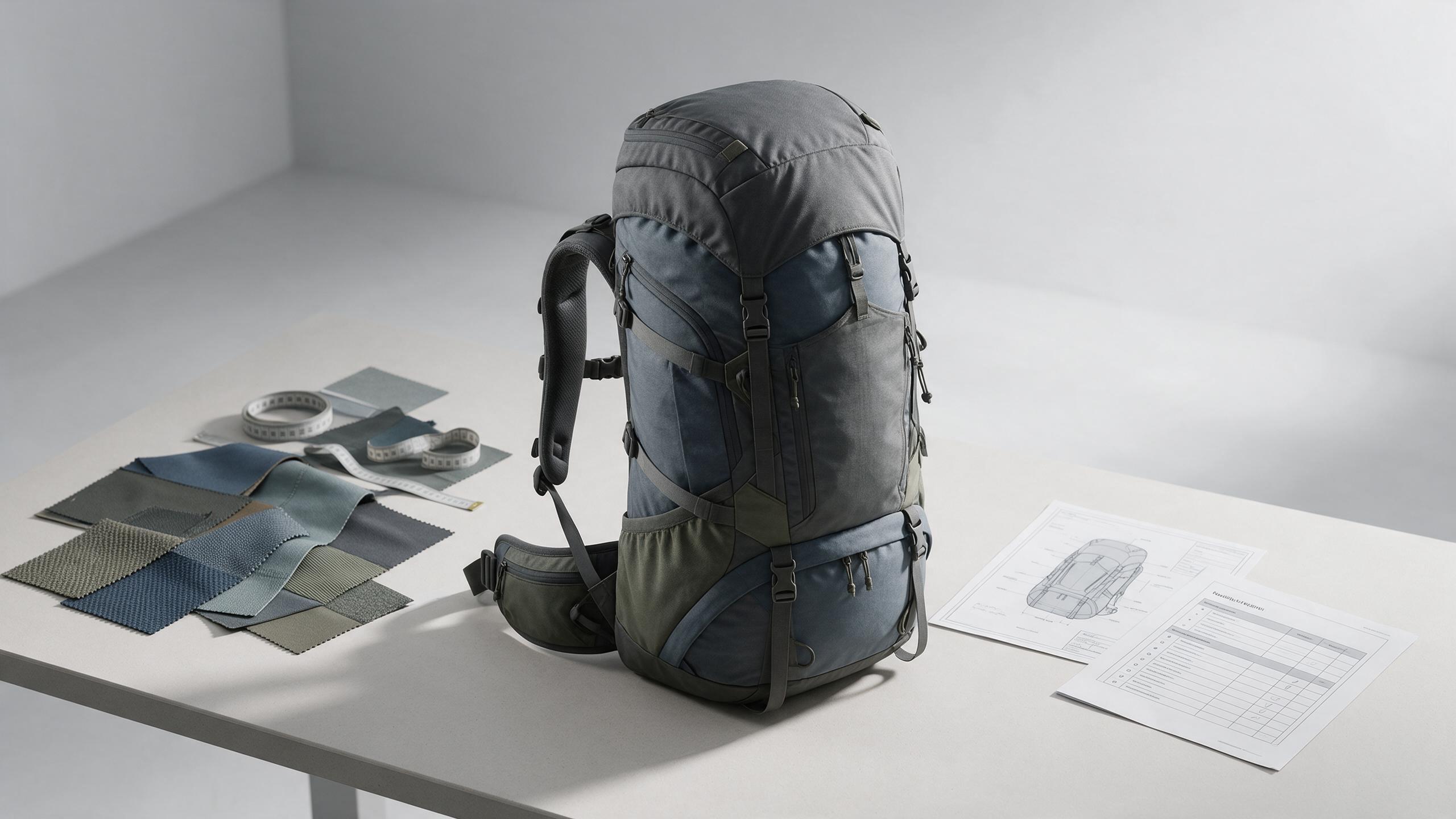
A capable hiking backpack manufacturer should be ready to discuss fabric, lining, webbing, foam, mesh, buckles, zippers, coatings, and thread as one system. Ask for the material name, composition, weight or denier where relevant, color reference, finish, sourcing lead time, and any available test documentation. If water resistance is part of the brief, identify the construction feature and test method to be confirmed rather than treating the phrase as a blanket claim.
It is useful to request evidence categories for abrasion, colorfastness, strap or load capacity, and zipper durability. Independent bag-testing services commonly evaluate these areas, but your own test plan should match the product and market. A supplier's answer is more useful when it names the sample, material lot, method, acceptance point, and party responsible for review.
For hiking bags, compare material proposals against the use case. A lightweight direction may change abrasion expectations; a more structured load-carrying design may change foam, webbing, and reinforcement needs. There is no single material recipe that fits every collection.
3. Review construction details where failure is most visible
Request close-up sample photos or a physical sample review for shoulder-strap attachment, hip-belt or waist-support integration, haul loop, load-lifter points, bottom panel, compression anchors, zipper ends, and internal binding. These are useful places to verify that the proposed construction follows the agreed specification.
Ask the hiking backpack manufacturer how they will record critical seams and reinforcements in the tech pack. You do not need to prescribe every stitch before development, but you do need a shared approval method. For example, the supplier can flag where bartacks, binding, seam allowances, or reinforcement patches require confirmation during sampling.
Comfort should also be treated as a sample-review issue. A claim about fit is not enough: arrange fit checks with the intended load range and document the observations that matter to your customer profile. If the pack has an adjustable back system or removable components, specify which settings and parts must be reviewed.
4. Use samples to test communication, not only the product
The sample stage shows whether a hiking backpack manufacturer can manage feedback without losing information. Provide a marked drawing or tech pack, then check whether the first sample reflects the requested dimensions, pocket layout, trims, branding location, and construction notes. Keep a version-controlled comment sheet so the next sample is judged against the latest approved requirement.
- Agree on a development brief and a list of open questions.
- Review the first sample against measurable and visual requirements.
- Record changes by location, not by general comments such as “make it stronger.”
- Approve a pre-production sample only after the bill of materials, workmanship points, labels, and packaging are aligned.
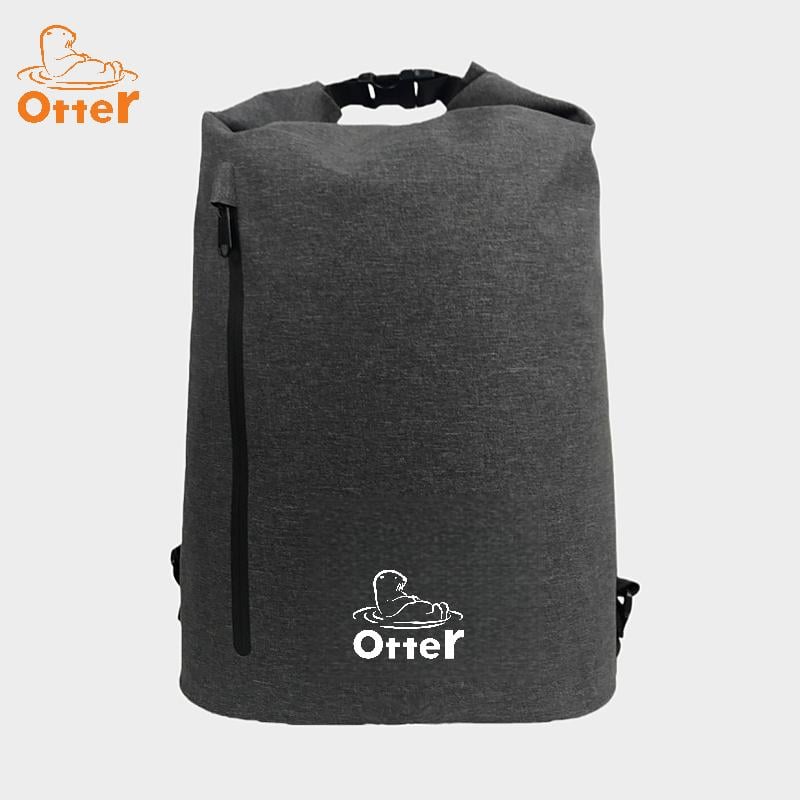
For a relevant product reference, review the development details and collection fit of the 70L Hiking Cycling Backpack Large Capacity Water-Resistant Outdoor Rucksack alongside your own brand brief. Treat the page as a starting point for product-category discussion, not as proof of unconfirmed specifications or tests.
5. Ask for a production-control and inspection plan
Supplier assessment should include how the factory controls material receipt, cutting, sewing, assembly, finishing, and packing. Ask the hiking backpack manufacturer who checks each stage, what records are retained, how nonconforming parts are isolated, and what happens when a material substitution is proposed. If a quality-management certification is relevant to your sourcing policy, verify the certificate, facility name, scope, and validity directly.
| Checkpoint | What to request | Why it matters |
|---|---|---|
| Incoming materials | Approved swatches, trim list, color reference, lot traceability where available | Helps identify unapproved substitutions before release |
| In-process sewing | Critical-point checklist and sample sign-off | Focuses attention on straps, stress areas, and closures |
| Finished pack | Appearance, function, dimensions, hardware, and packing checks | Connects inspection to the approved brief |
| Test evidence | Applicable reports or a mutually agreed test plan | Keeps performance claims tied to evidence |
6. Confirm branding, labels, and packaging before production
Brand elements can create avoidable rework when they are left until late in development. Confirm artwork format, logo scale, print or embroidery location, woven-label construction, care-label content, barcode placement, polybag or carton requirements, and packing quantity. Your hiking backpack manufacturer should capture these points in the approved package, including any market-specific labeling direction supplied by your team.
For hiking bags, packaging is also part of product protection. Specify how hardware, straps, and shaped panels should be packed so transit does not distort the pack or create marks that affect retail presentation.
7. Make the quotation comparable
Before selecting a hiking backpack manufacturer, compare suppliers using the same cost and approval assumptions. Separate tooling or development costs from unit pricing; identify the minimum order quantity by color or material; and ask what changes when components, logo methods, or packaging are revised. The lowest quote can be difficult to evaluate if it excludes a material, test, or packing requirement included elsewhere.
A short supplier scorecard can keep the decision practical: brief understanding, sample accuracy, material transparency, construction documentation, inspection process, communication quality, and quotation clarity. Weight the categories according to your launch risk rather than looking for a universal winner.
Final checklist for outdoor-brand procurement teams
Before appointing a hiking backpack manufacturer, confirm that the supplier can:
- Translate your target customer and trip scenario into a clear product brief.
- Provide traceable material and trim information for approval.
- Show how key load-bearing and access details will be constructed.
- Run a disciplined sample-and-comment process.
- Document inspection points and the evidence requested by your sourcing policy.
- Lock branding, labels, packaging, and quotation assumptions before bulk production.
The right hiking backpack manufacturer is a partner whose development process makes your brand requirements easier to review and confirm. Start with a detailed brief, use the sample cycle to validate both product and communication, and keep every material, construction, test, and packaging decision in an approval record.
 Hot News